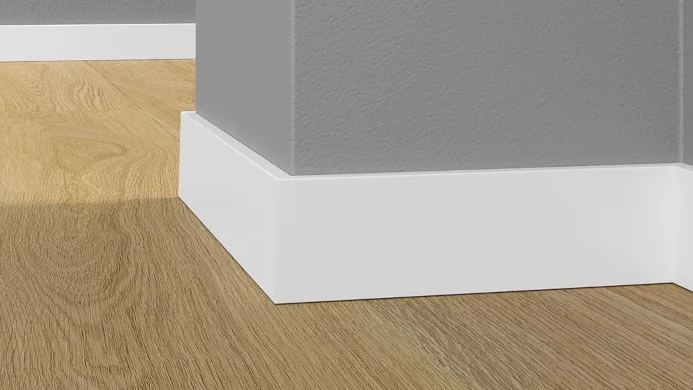
PVC moldings are the finishing element of the floor installation, they add class to the floor, but also hide the wiring. Installation is simple using clips or assembly glue.
contents
Before installing the moldings
Use moldings from the same box in each room.
A moldings mounted with adhesive covers a 13.4 mm expansion gap.
A moldings mounted on clips without spacers covers a 13.4 mm expansion gap.
A moldings mounted on clips with spacers covers a 16.4 mm expansion gap.
We recommend using a 6mm x 30mm expansion bolt to mount the clips.
Attach moldings with clips
1.
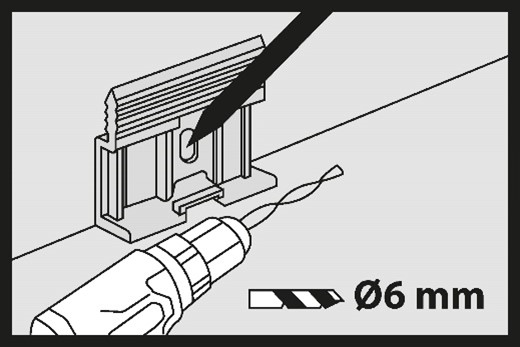
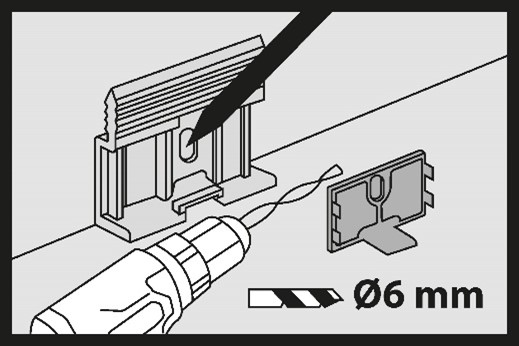
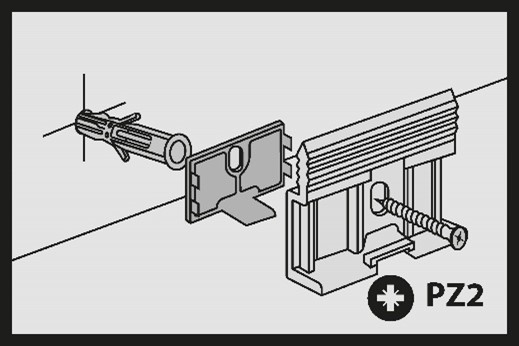
Position the clip against the wall and mark the hole’s center. Drill a 6 mm hole at the marked spot for the wall plug.
2.
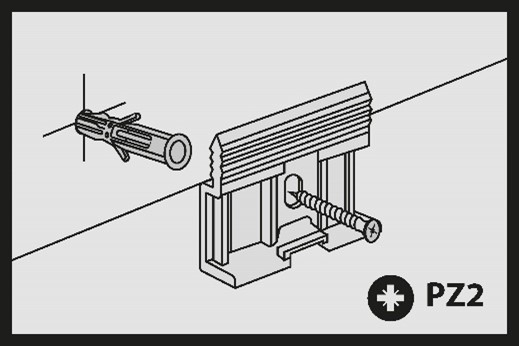
Insert the wall plug into the hole and se-cure the clip to the wall with a screw. Use the correct wall plug for the wall material.
3.
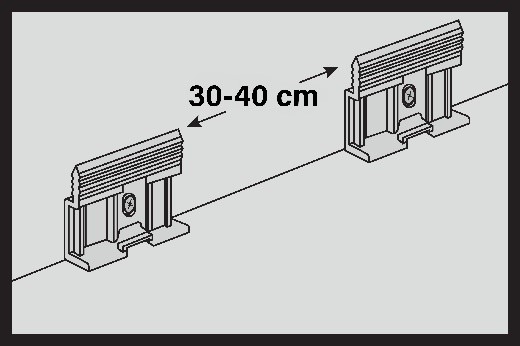
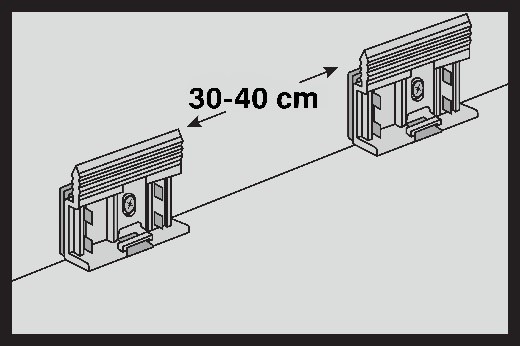
Attach the clips evenly, placing them 30-40 cm apart.
4.
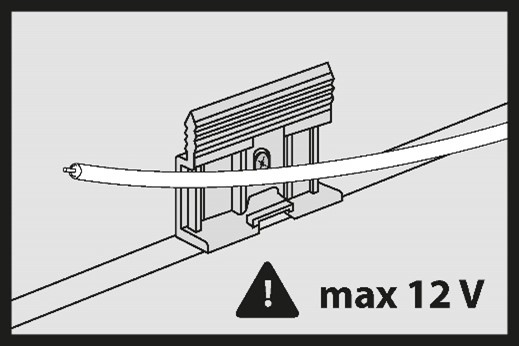
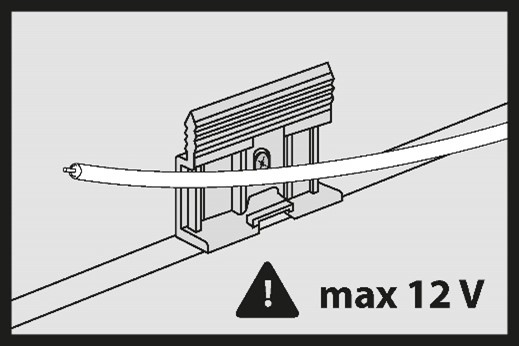
A channel on the underside of the moldings provides space for electrical wires or cables. The maximum permissible voltage in the wires is 12V.
5.
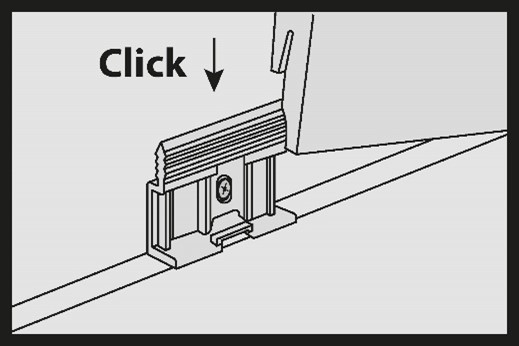
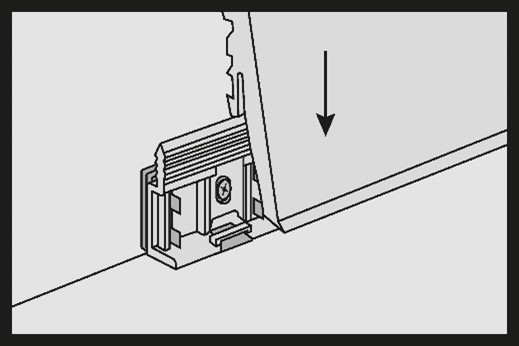
Fit the moldings onto the clip from above, pressing firmly.
6.
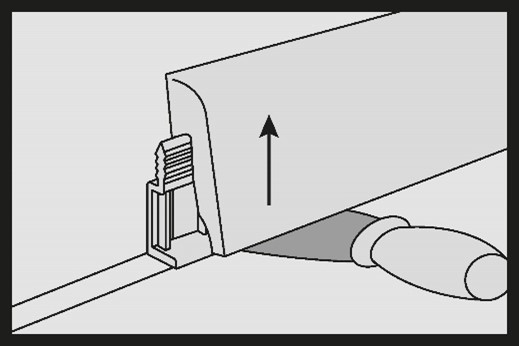
To remove the moldings, use a thin tool (e.g., a spatula) to pry it off the clip.
Attach moldings with clips and spacers
7.
Adding the spacer increases the expan-sion gap coverage by 3 mm. Position the clip against the wall and mark the hole’s center. Drill a 6 mm hole at the marked spot for the wall plug.
8.
Insert the wall plug into the hole and se-cure the clip and spacer to the wall with a screw. Use the correct wall plug for the wall material.
9.
Attach the clips evenly, placing them 30-40 cm apart.
10.
A channel on the underside of the moldings provides space for electrical wires or cables. The maximum permissible voltage in the wires is 12V.
11.
Fit the moldings onto the clip from above, pressing firmly.
Attach moldings with adhesive
12.
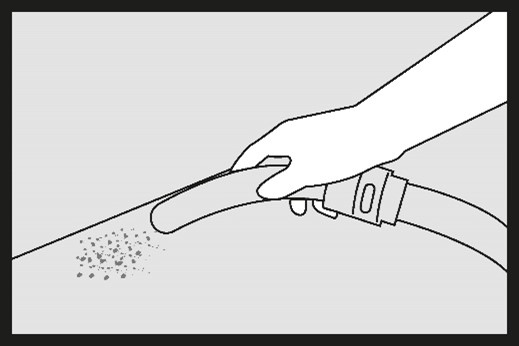
Vacuum the wall and floor where the moldings will be attached before applying adhesive to ensure a strong bond. The wall must be free of cracks, loose paint, flaking plaster, dust, dirt, and any other contaminants that could com-promise the adhesive bond.
13.
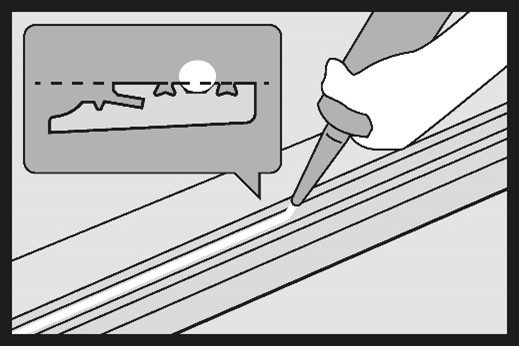
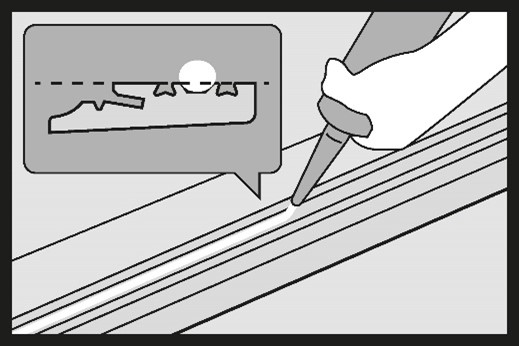
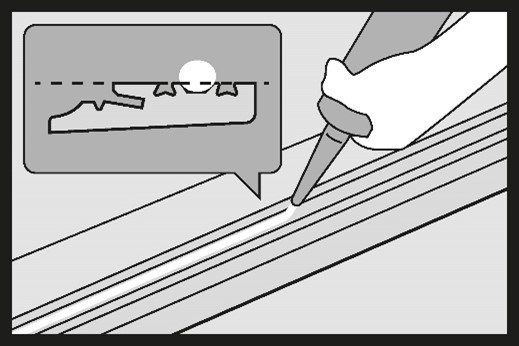
Apply adhesive to the grooves on the back of the moldings. The adhesive should slightly extend beyond the moldings surface to ensure a good bond with the wall.
14.
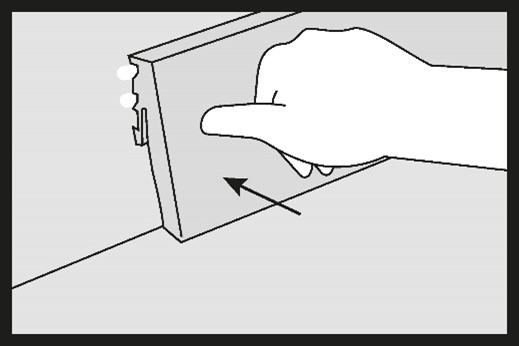
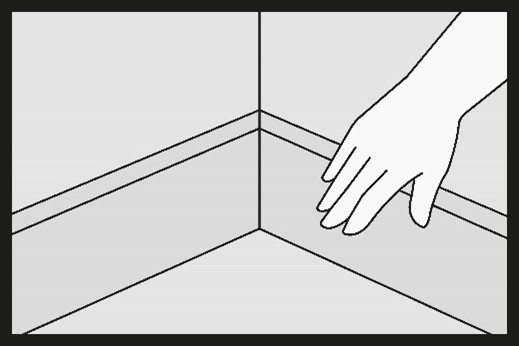
Press the molding firmly against the wall. It is essential to secure the molding while the adhesive sets to prevent it from detaching. MOLDINGS SHOULD ONLY BE GLUED TO THE WALL TO ALLOW FOR FLOOR EXPANSION AND CONTRACTION.
Attach moldings in internal corner without trim
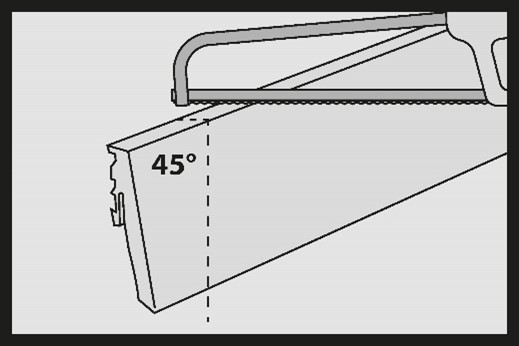
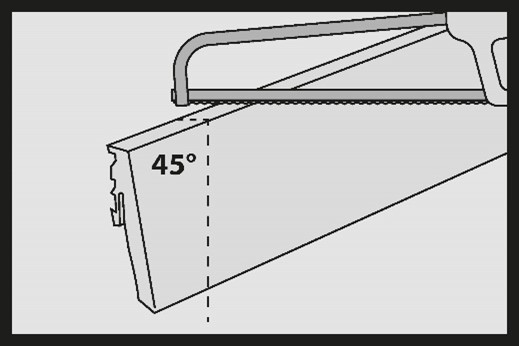
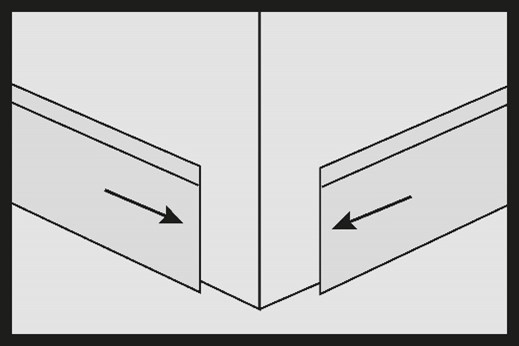
15. Cut the molding at a 45° angle to create a mitre joint. For best results, use an electric mitre saw.
16.
Apply adhesive to the grooves on the back of the moding. The adhesive should slightly extend beyond the molding surface to ensure a good bond with the wall.
17.
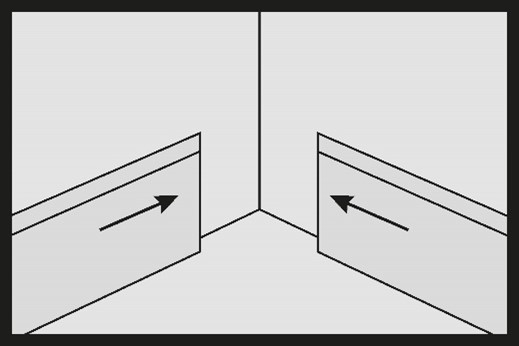
Attach the moldings in the corner to the prepared wall with adhesive.
18.
Press the molding firmly against the wall. It is essential to secure the molding while the adhesive sets to prevent it from detaching. MOLDINGS SHOULD ONLY BE GLUED TO THE WALL TO ALLOW FOR FLOOR EXPANSION AND CONTRACTION.
Attach moldings in external corner without trim
19.
Cut the molding at a 45° angle to create a mitre joint. For best results, use an electric mitre saw.
20.
Apply adhesive to the grooves on the back of the molding. The adhesive should slightly extend beyond the molding surface to ensure a good bond with the wall.
21.
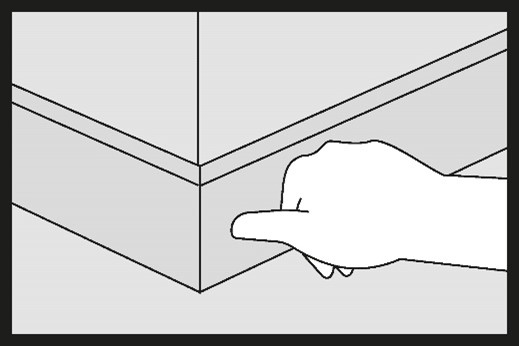
Attach the moldings in the corner to the prepared wall with adhesive.
22.
Press the moldings firmly against the wall. It is essential to secure the molding while the adhesive sets to prevent it from detaching. MOLDINGS SHOULD ONLY BE GLUED TO THE WALL TO ALLOW FOR FLOOR EXPANSION AND CONTRACTION.
Press the moldings firmly against the wall. It is essential to secure the molding while the adhesive sets to prevent it from detaching. MOLDINGS SHOULD ONLY BE GLUED TO THE WALL TO ALLOW FOR FLOOR EXPANSION AND CONTRACTION.
PVC moldings
PVC moldings are the finishing element of the floor installation, they add class to the floor, but also hide the wiring. The most popular shades include white PVC moldings, but they are also available in the shades of the floor. Thanks to this, they fit practically any interior and style. PVC moldings are flexible and thermoplastic, thanks to which they will perfectly fit the walls.